Antara: Catalyst and Urban Pacemaker
Between the 1980s and 90s, Mexico City’s former identity as a seat of manufacturing industry had reached decline. The city’s economic engine shifted from broad industrial activity towards commerce, finance and services. As industry declined, the factories of Granada and Ampliación Granada fell quiet, leaving large, enclosed sites within a living neighbourhood
Decline gave way to a new urban lacuna, and from the millennium onwards, the potential of vacated industrial land spurred planning regulations in Granada and Ampliación Granada to move from industrial to mixed commercial and residential use. The former site of General Motors formed part of this ex-manufacturing landscape and, in 2006, became the site for Sordo Madaleno’s Antara project.
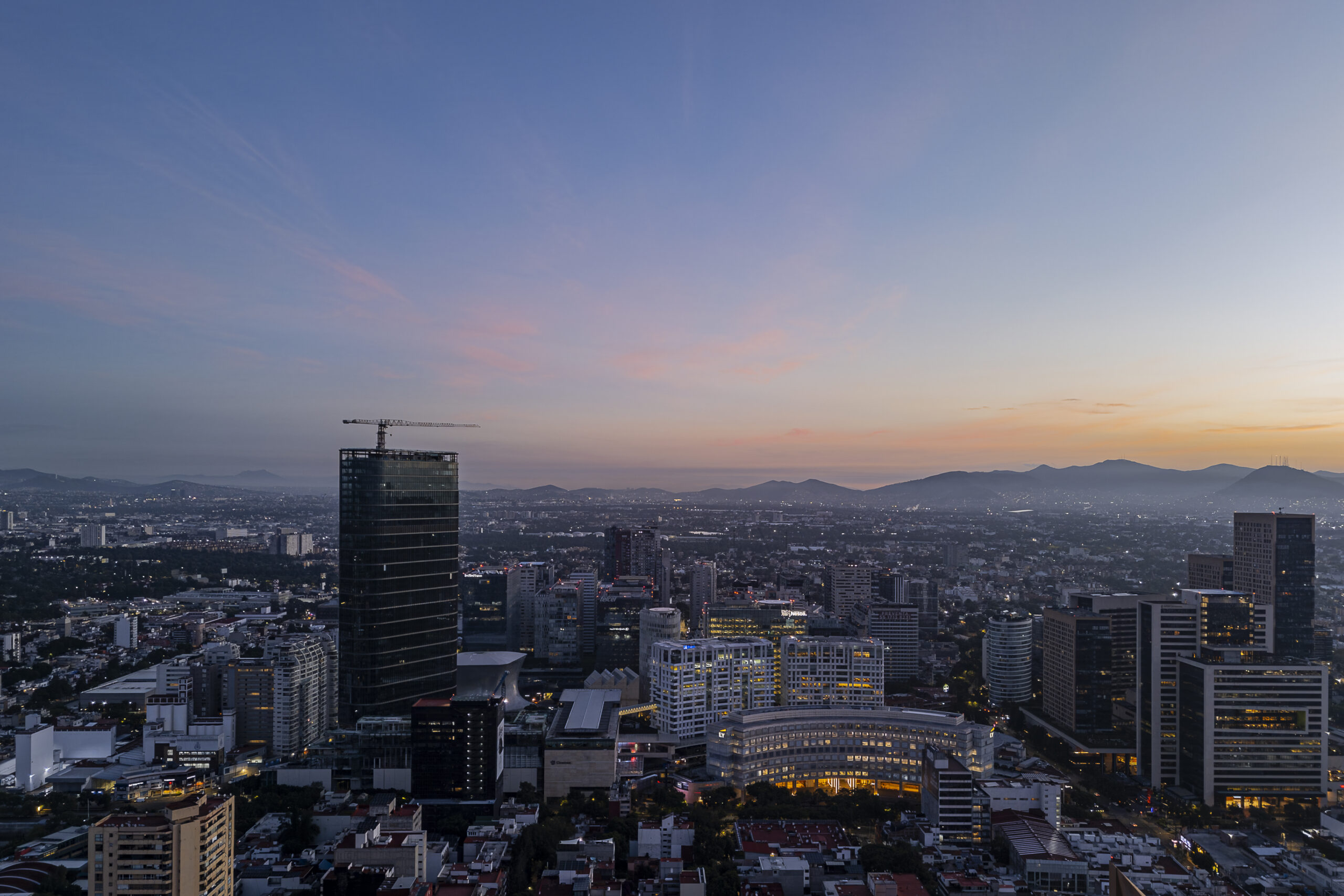
What followed was more than the redevelopment of a single property. Antara became part of a broader transformation of this section of Mexico City, helping to shift a formerly industrial territory towards a new mixed-use urban district. Its impact extended beyond its boundaries: attracting investment, changing perceptions of the area, and helping establish a new centre of gravity within the metropolis.
Crucially, this transformation was not conceived as a finished object. Antara has continued to evolve, increasing its density, diversity of uses and relationship with the city around it.
City-making: revelation through intervention
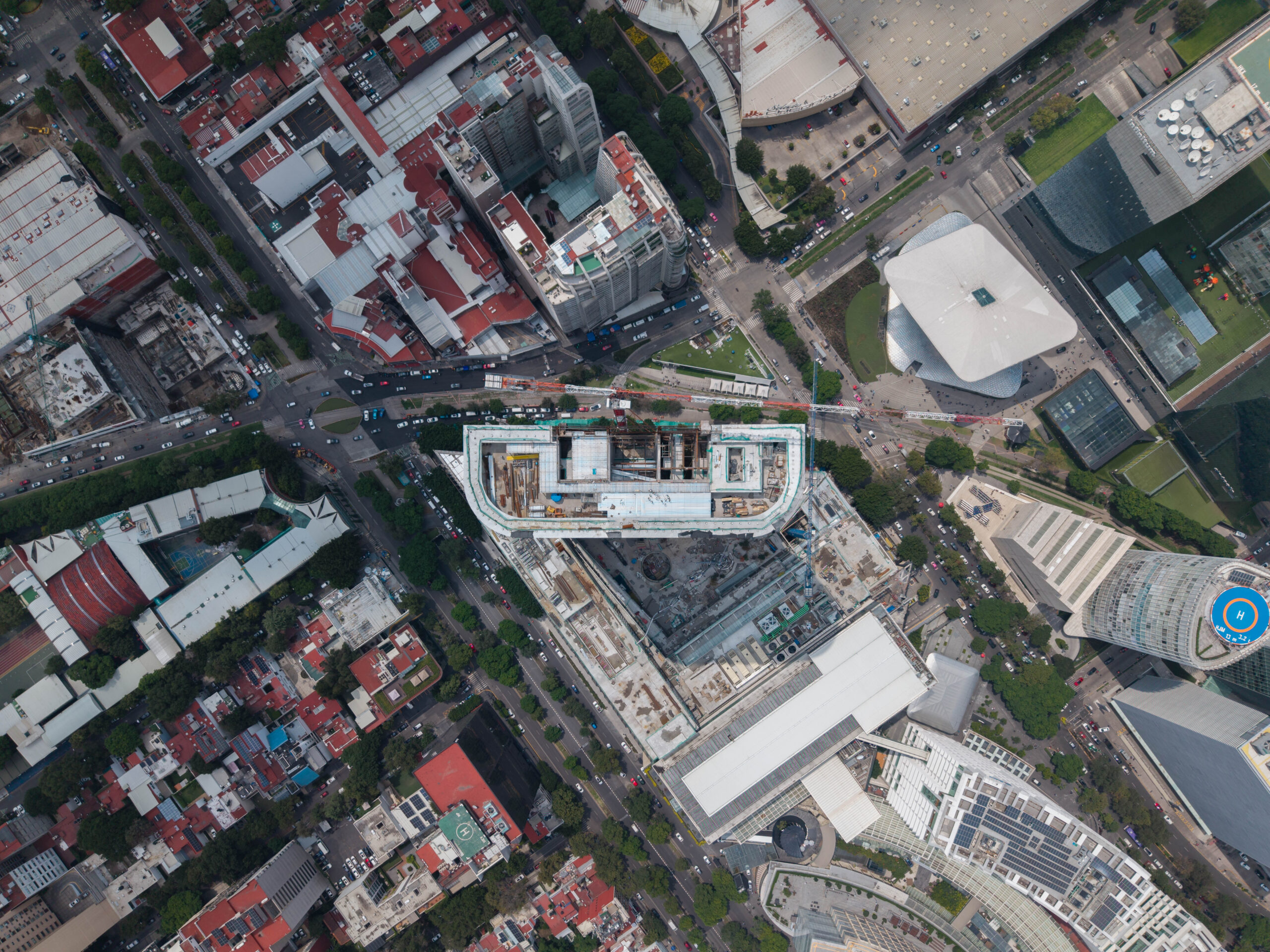
Antara’s site formed part of Mexico City’s industrial belt, occupying a void that was centrally located yet functionally obsolete. The project’s first phase reworked Antara’s vast plot into a low-rise, open-air urban complex that would break the industrial superblock into human-scaled pedestrian streets, plazas and landscaped courtyards. The instinct to build a super-mall was rejected in favour of smaller-scale volumes organised around circulation and a vibrant public realm.
In doing so, Antara revealed the transformative potential held within obsolete urban land. Permeability, mixed uses and visible public space unlocked new forms of urban life. Its strengths were three-fold: it created bold architectural character in its dominant curved form; it facilitated pedestrian movement; and it was visually porous, creating continuity with its surrounding urban fabric. All of this matched its programmatic flexibility, enabling different activities to coexist within one public place.
Rather than treating retail as an isolated destination, the project used commerce as an engine for place-making. Streets, courtyards, landscape and public space became as important to the experience as the buildings themselves.
Antara as a model for urban intensity
As it developed, Antara consolidated as a business district. Beginning in 2008, two corporate office buildings along the north-western edge of the complex intensified the site vertically, adding substantial workplace floorspace above the lower, porous commercial levels. This meant that an already highly penetrable piece of the city — previously unapproachable — had broadened both its commercial appeal and its urban viability.
The project created the conditions for different populations to occupy the same place at different moments of the day. Retail generated footfall and public life; offices introduced a permanent working population; restaurants, entertainment and public spaces extended activity beyond conventional commercial hours. Density was therefore not simply a question of adding square metres, but of increasing the intensity of urban life.
An unfinished piece of city
Antara is now entering another chapter. New interventions will add new programme, density and connections while reinforcing the public realm that has defined the project from the start. As it maturs, Antara continues to define itself as an urban system capable of growing and adapting over time.
Antara began by opening an industrial superblock and introducing streets, landscape, commerce and public life. It then intensified, bringing workplaces and new populations into the site. In its next interventions, it will see the inclusionof public art — an addition rarely associated or expected from development of industrial land.
The measure of its success is the urban activity it has generated, the investment it helped unlock, and the connections it has created. Antara did not arrive in a finished neighbourhood, but helped create one – and is still doing so till today.