Mass Timber in Mexico City: Structural Logic of Corporativo SOMA
Mexico City presents a particular challenge for timber construction: high seismic demand, a building culture rooted in concrete, and regulatory frameworks that have yet to fully address mass timber at corporate scale. Corporativo SOMA was designed within these constraints — and proposes a way through them.
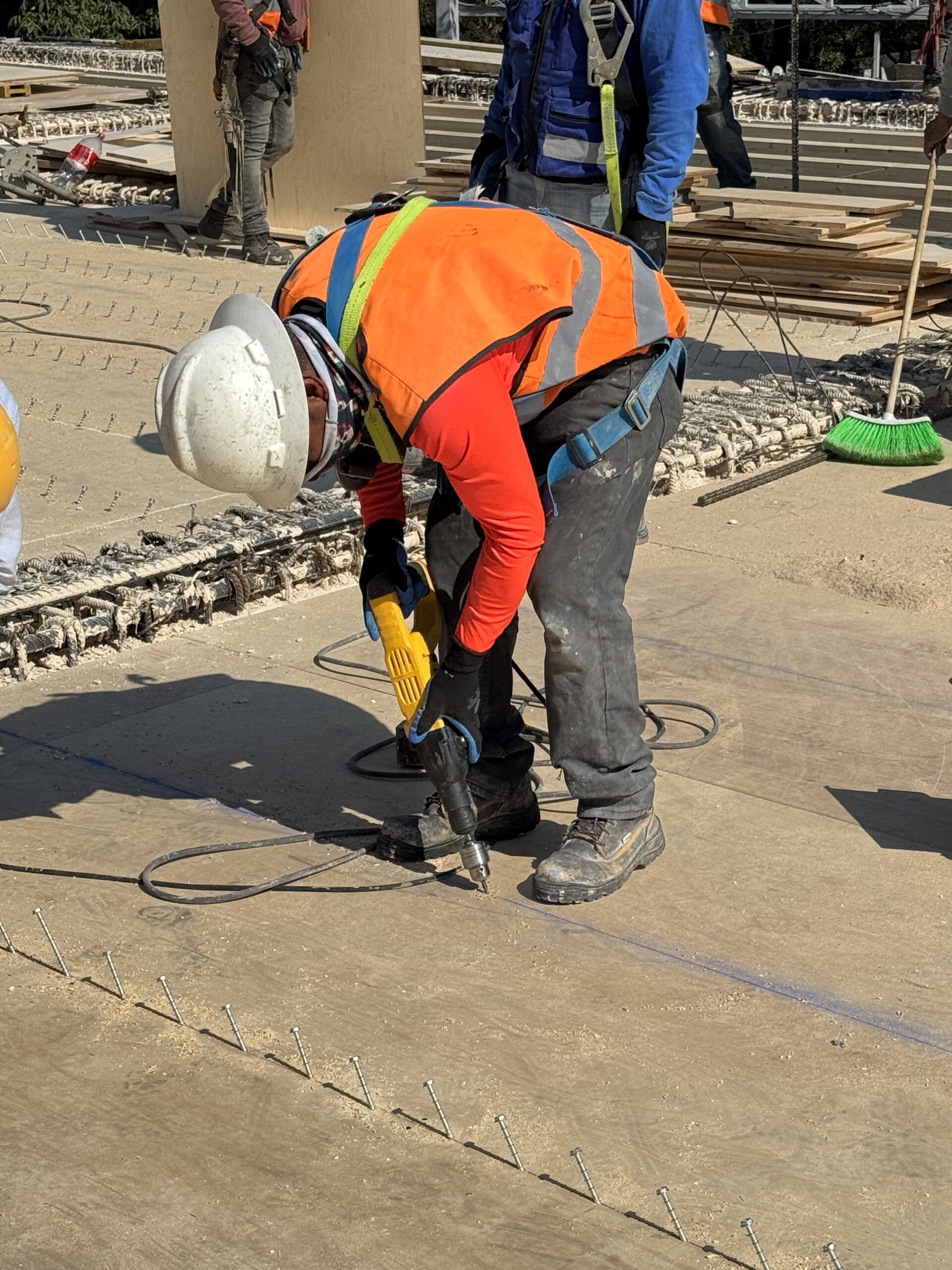
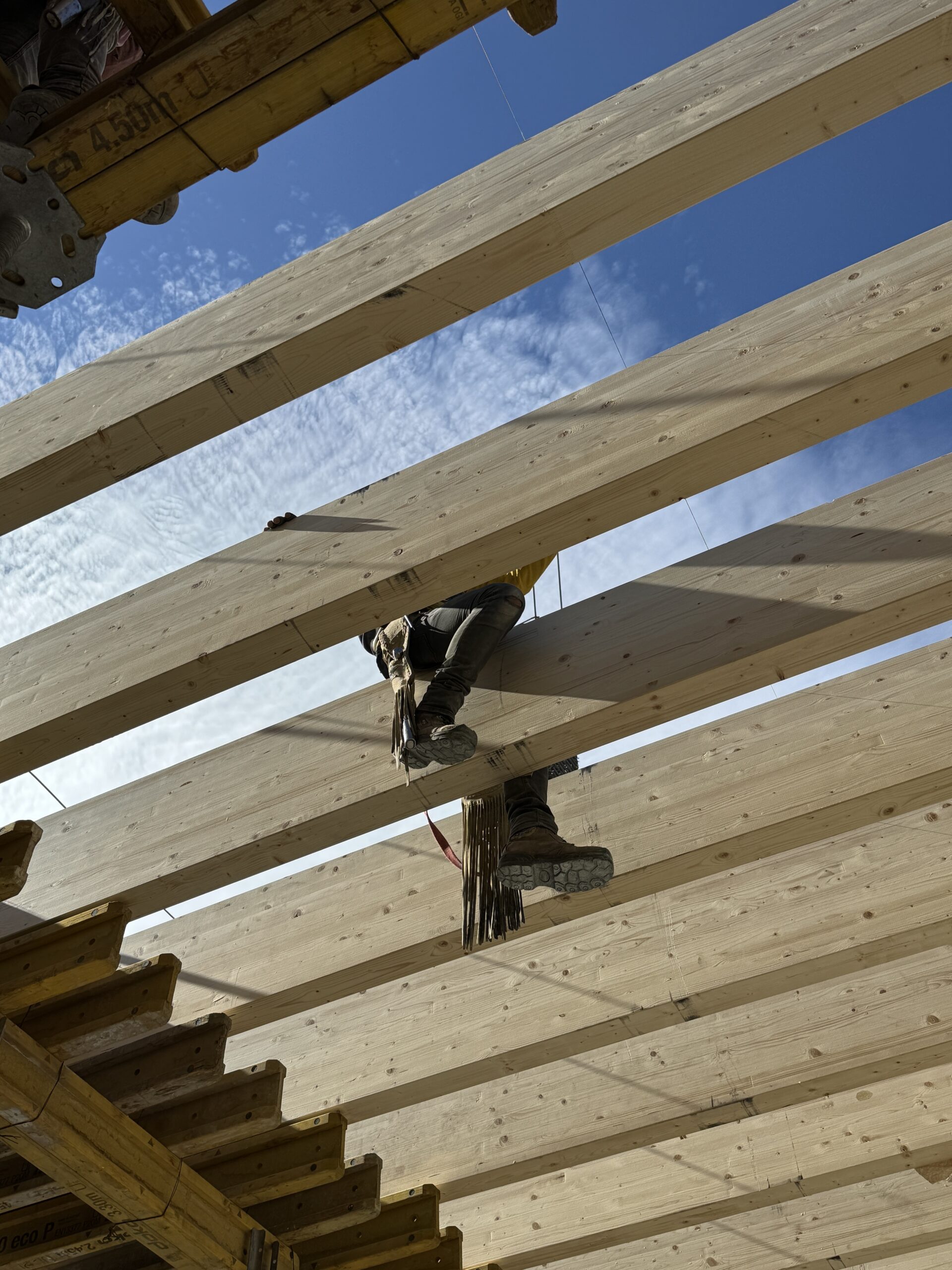
The approach is a hybrid system: reinforced pigmented concrete moment frames carry lateral loads, while glue-laminated timber beams (120mm × 480mm) span between girders as an exposed composite floor system. The two materials are structurally integrated through high-stiffness timber-pigmented concrete composite connectors — ½” threaded lag screws at 300mm o.c. or HBV plates — acting through a 20mm ACX plywood substrate. Embed plates with shims manage the timber-to-concrete interface at each support. Screw spacing was tightened beyond SOM’s baseline to satisfy local seismic performance requirements, a deliberate act of caution that ultimately strengthened confidence in the system among reviewers.
The beam grid runs at 610mm centres — half the structural module. Where the engineers could have spanned wider, the design called for closer. Every detail of the ceiling — its rhythm, its proportions, its exposed connections — was considered.
Timber was fabricated by Moser in Austria, sourced from certified regenerative forests — a supply chain that contributed to the project’s LEED Gold certification, and which partially frames the carbon argument despite the shipping distance. What Mexico City currently lacks in local CLT supply chains, Corporativo SOMA compensates for through system efficiency and reduced concrete volumes overall.
The design approach demonstrated that CLT can be integrated within existing Mexican building regulation without compromise on design intent.