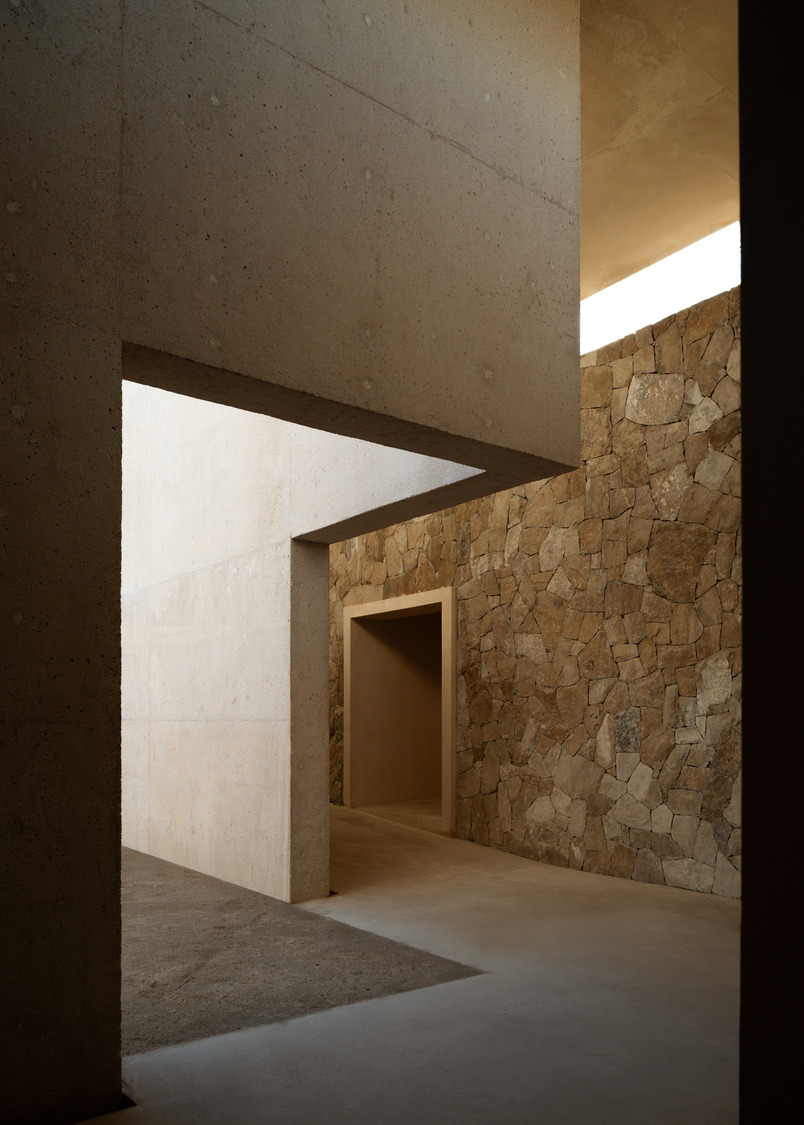
Shaping an Experience
A key factor in our approach is tectonics. Tectonics describes the constructive honesty of an architectural piece — understanding the building from its bones to its skin is inherently linked to the practical decisions behind the construction system. These decisions are governed by the dynamics and experiences we seek to create for users in their daily lives.
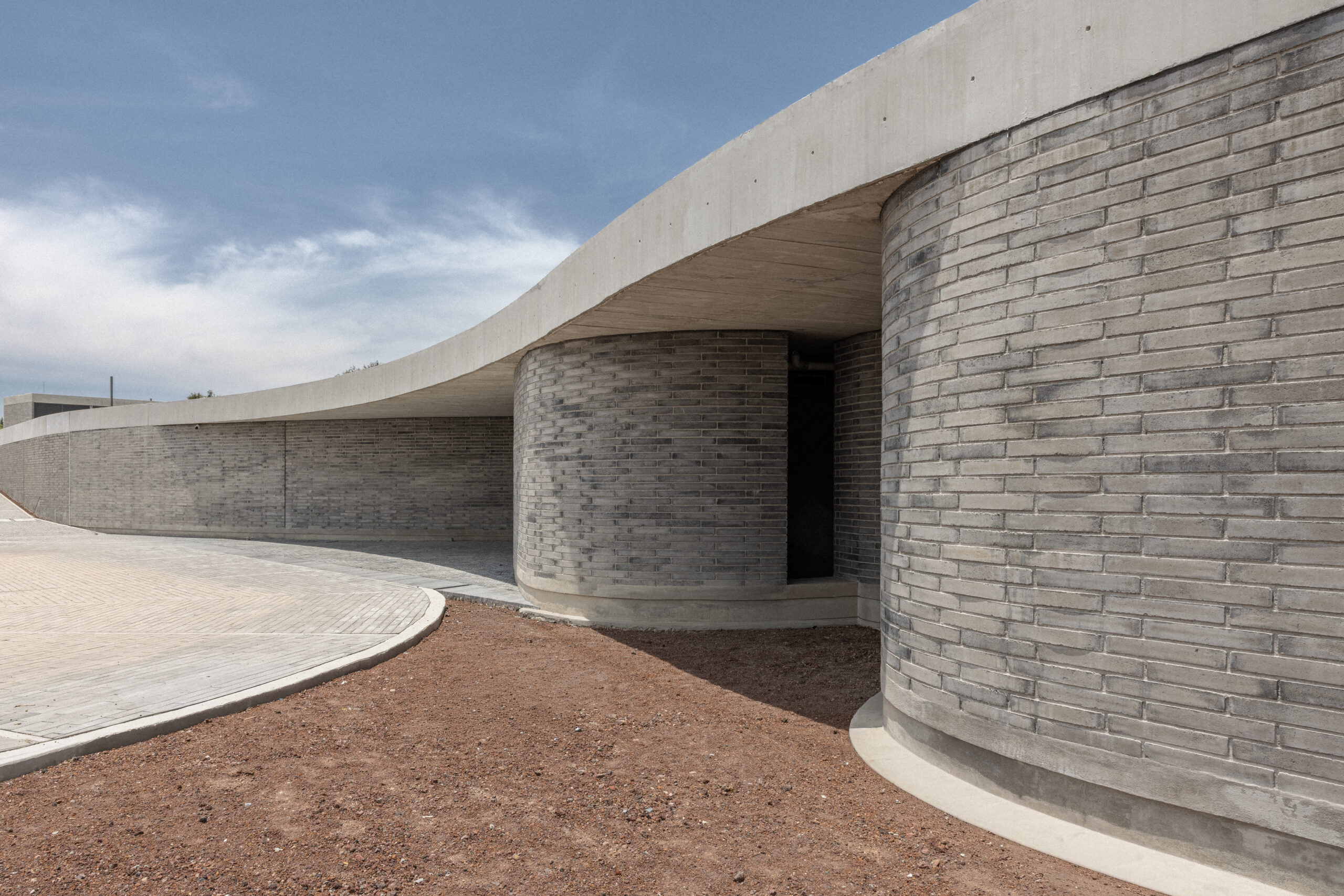
In the case of the school, the intentions were clear: a safe environment for children was the goal, one where the building’s lines would guide movement through the space, and where the arrangement of classrooms around courtyards would allow for a perpetual visual connection between outside and inside. Imagining children running and laughing through the corridors was our motivation for eliminating — at all costs — any blind spots and sharp forms such as 90-degree vertices.
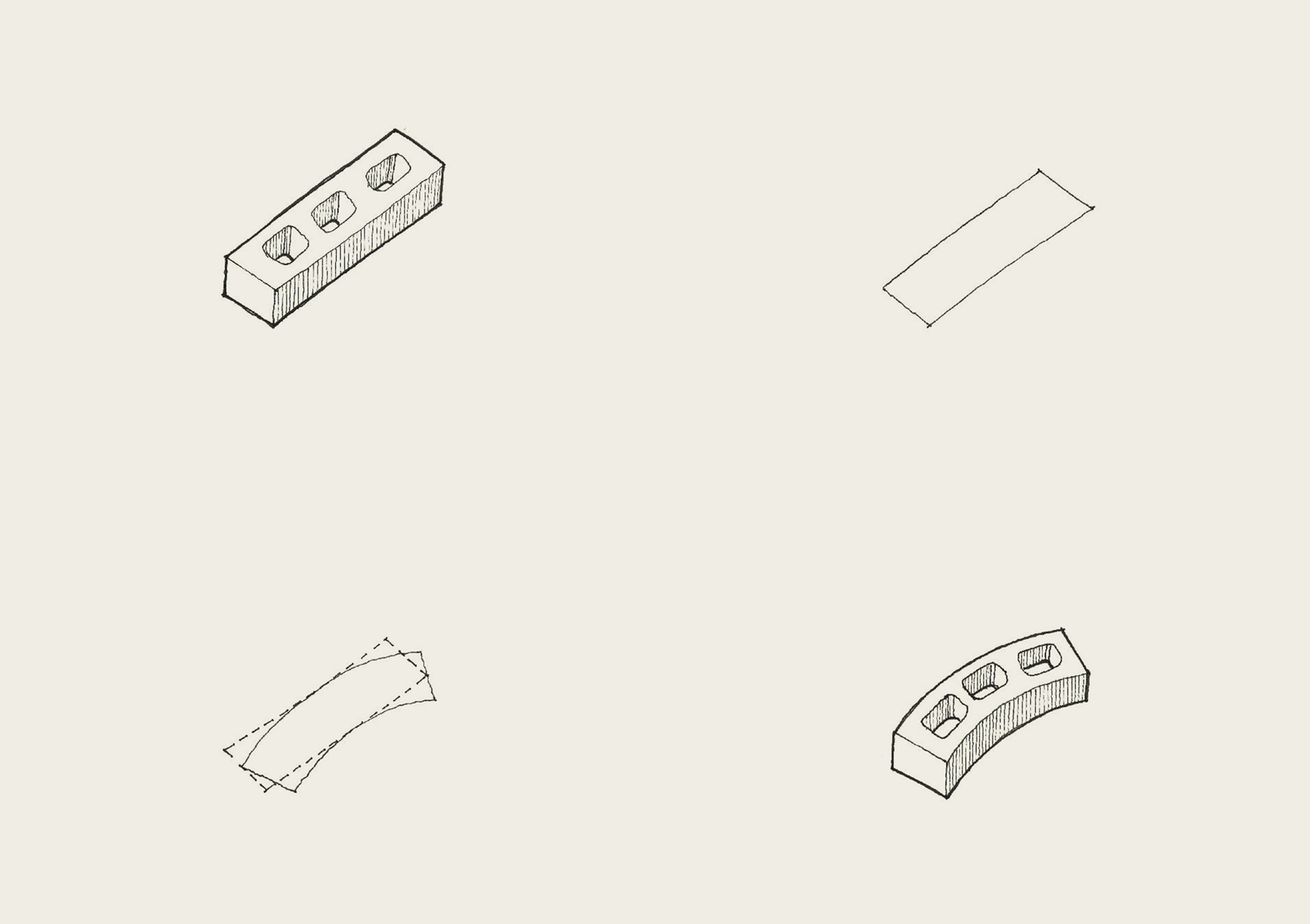
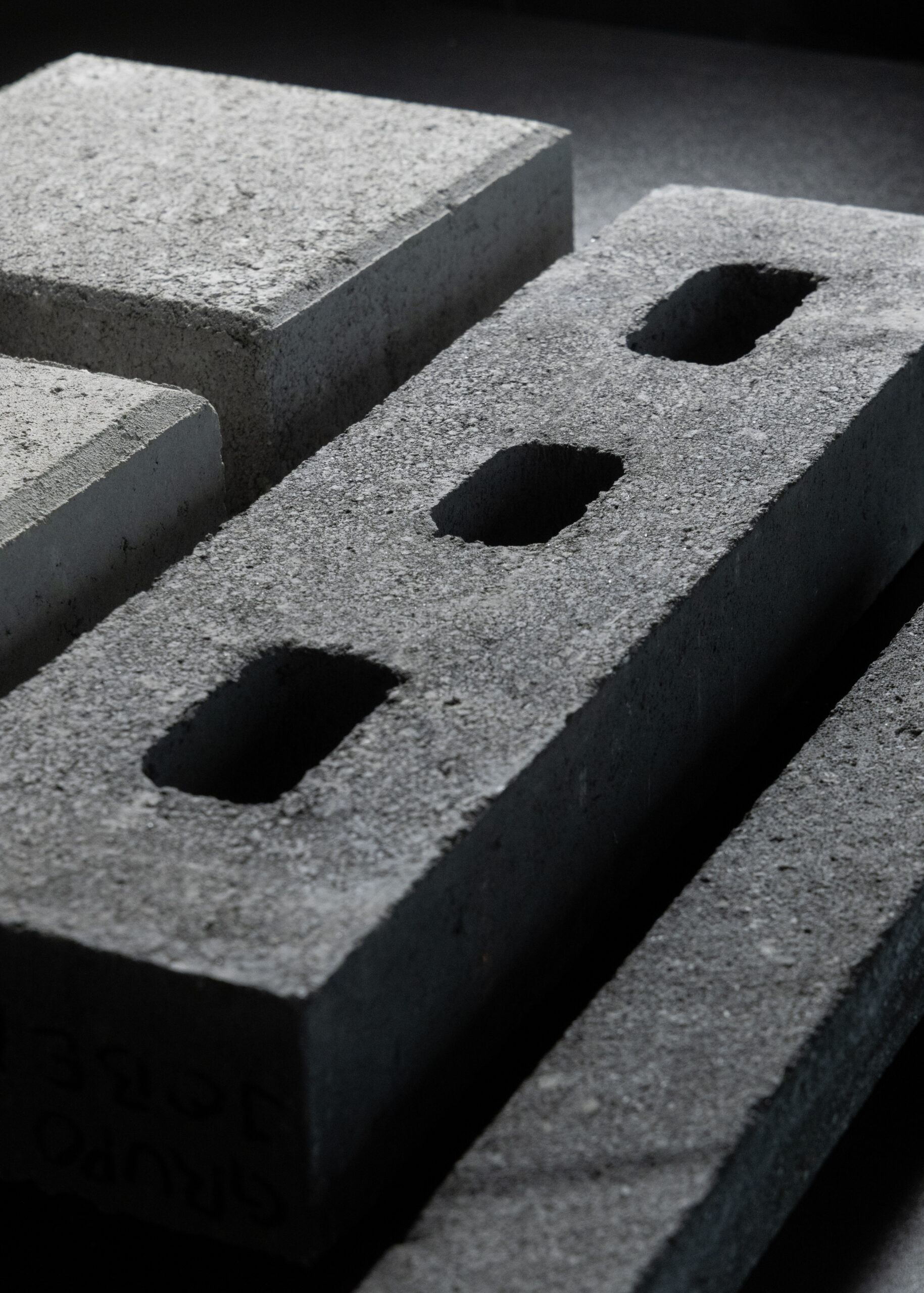
The use of concrete block seemed fitting, as the same material achieves both the wall structure and the final finish. Starting from the premise that concrete block is an industrialised material, we felt compelled to understand the manufacturing process, and recognised that it requires a mould and a pour. We approached Grupo Joben with a suggestion and a question: could a curved mould be made, and what would that entail?
The implications: producing a special mould whose cost was negligible relative to the project’s overall investment, a longer manufacturing time, and the need to resolve all corners using a single radius so that just one special piece could address the entire project.
The result: corners that unfold like a ribbon, opening the visual field and interacting subtly with light — transforming an exposed concrete block wall into an invitation to play. Achieving dynamics that allow the building to recede into the background, so that what truly matters is the life unfolding within it.