Canadian School
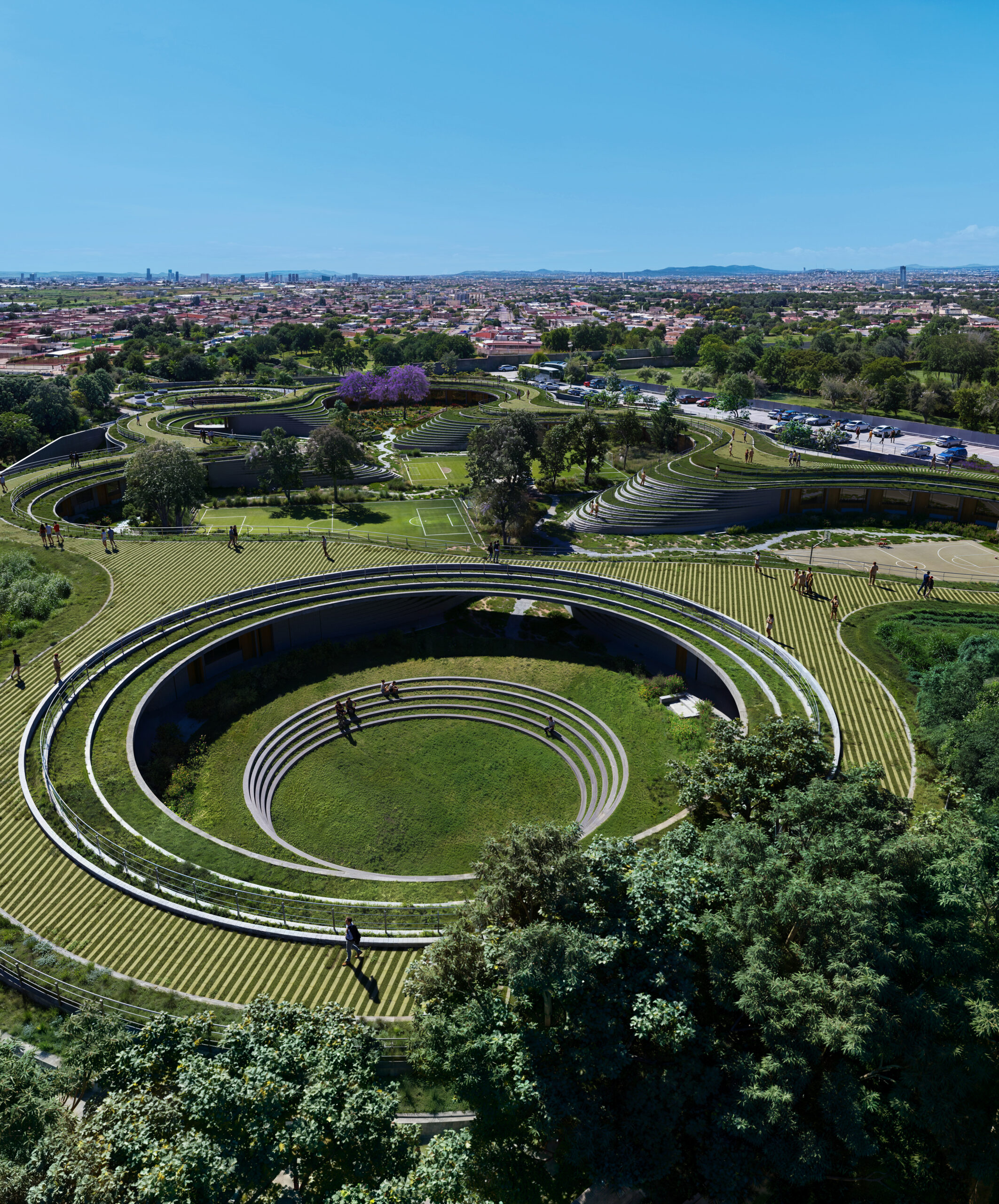
Set within direct sight of the active Popocatépetl volcano, the Canadian School—a primary school campus—becomes a horizontal imprint of its vertical mass—a new sink of knowledge that begins its lessons from within the land. The school is located in Cholula, Puebla, central Mexico. Its site is vast and agrarian—its grounds kneading into 20,180 sqm of land long left fallow. In its perpendicularity with Popocatépetl, the school is a constant witness to cycles of nature, allowing students to grow up attuned to the character of the landscape.
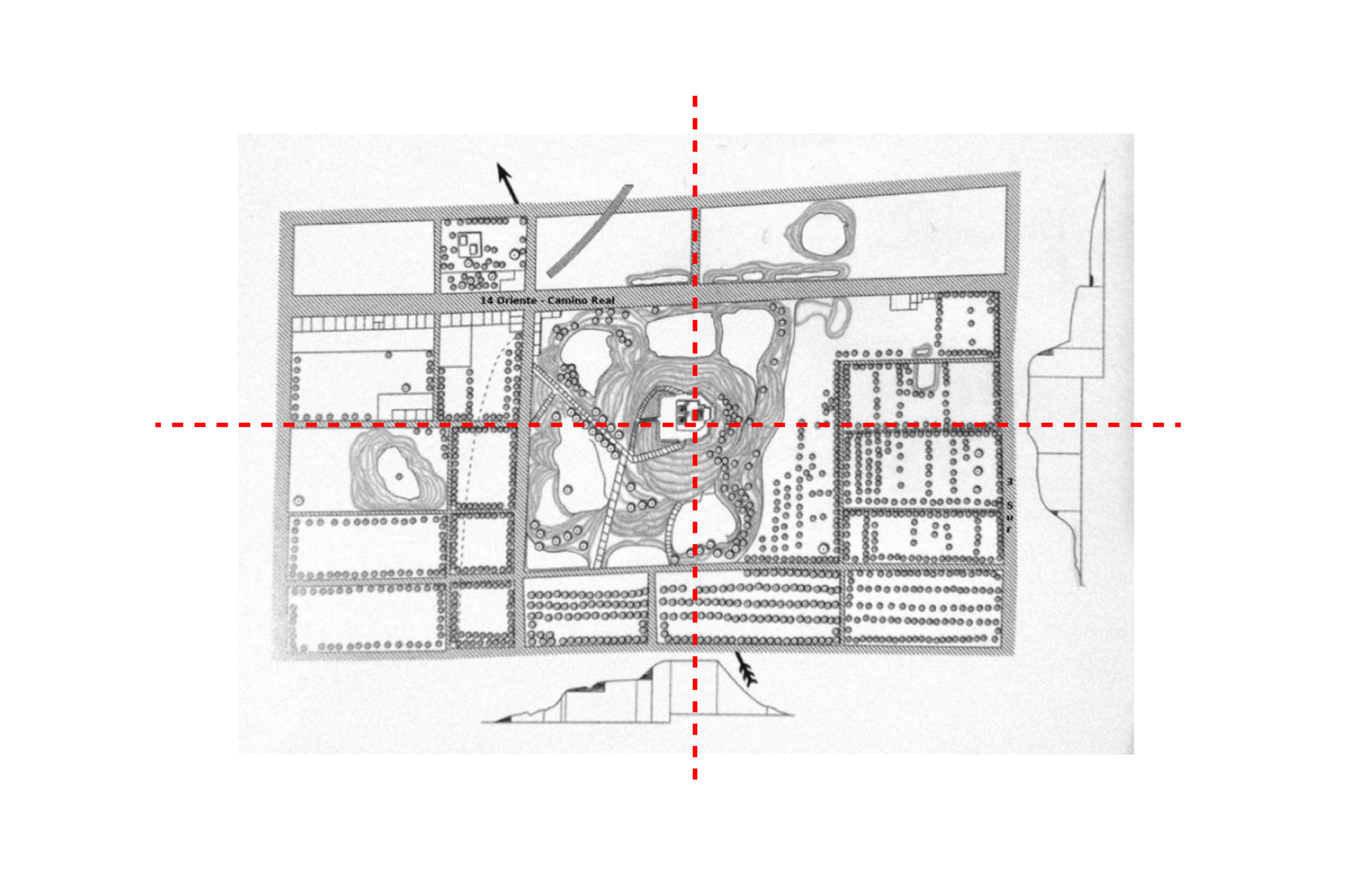
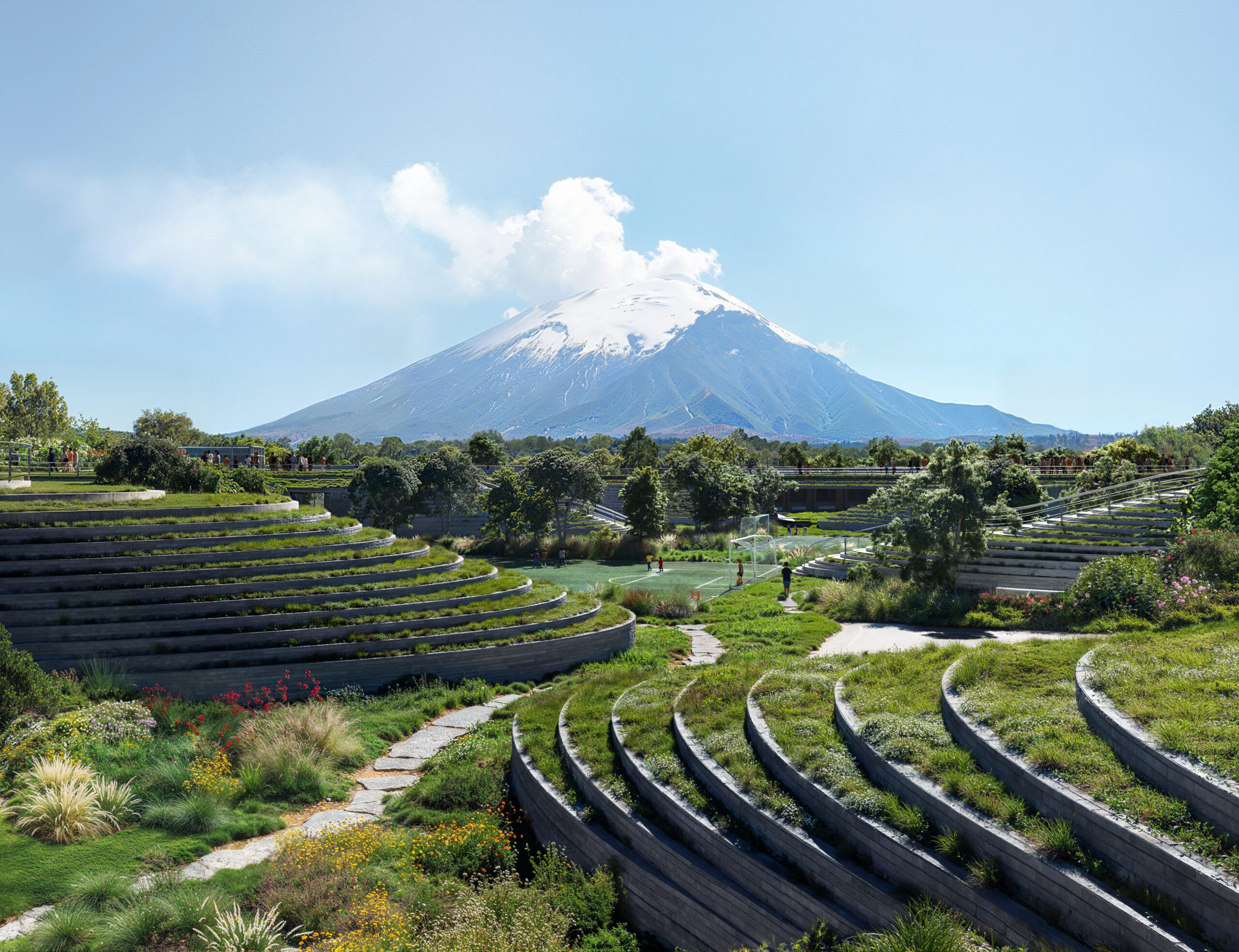
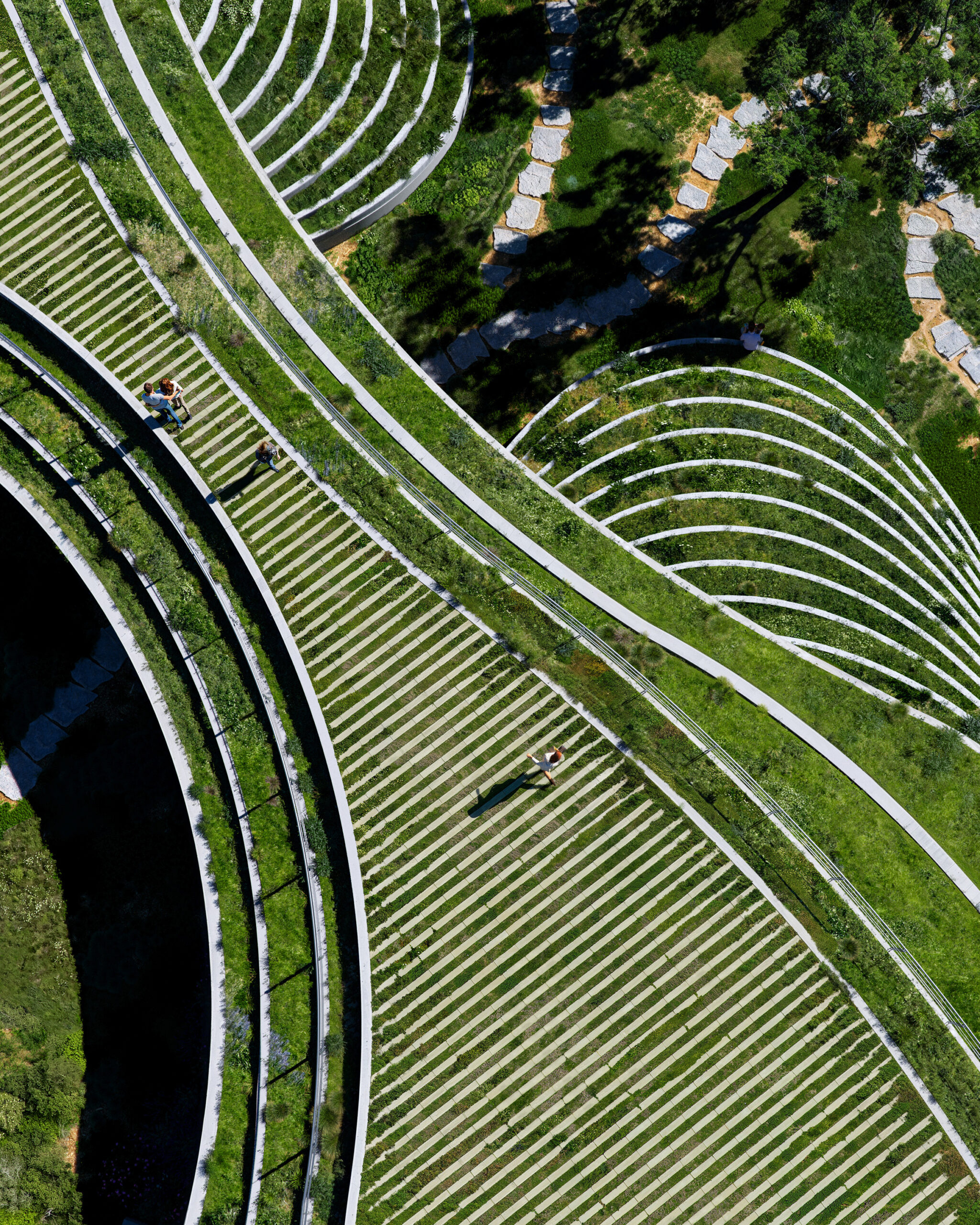
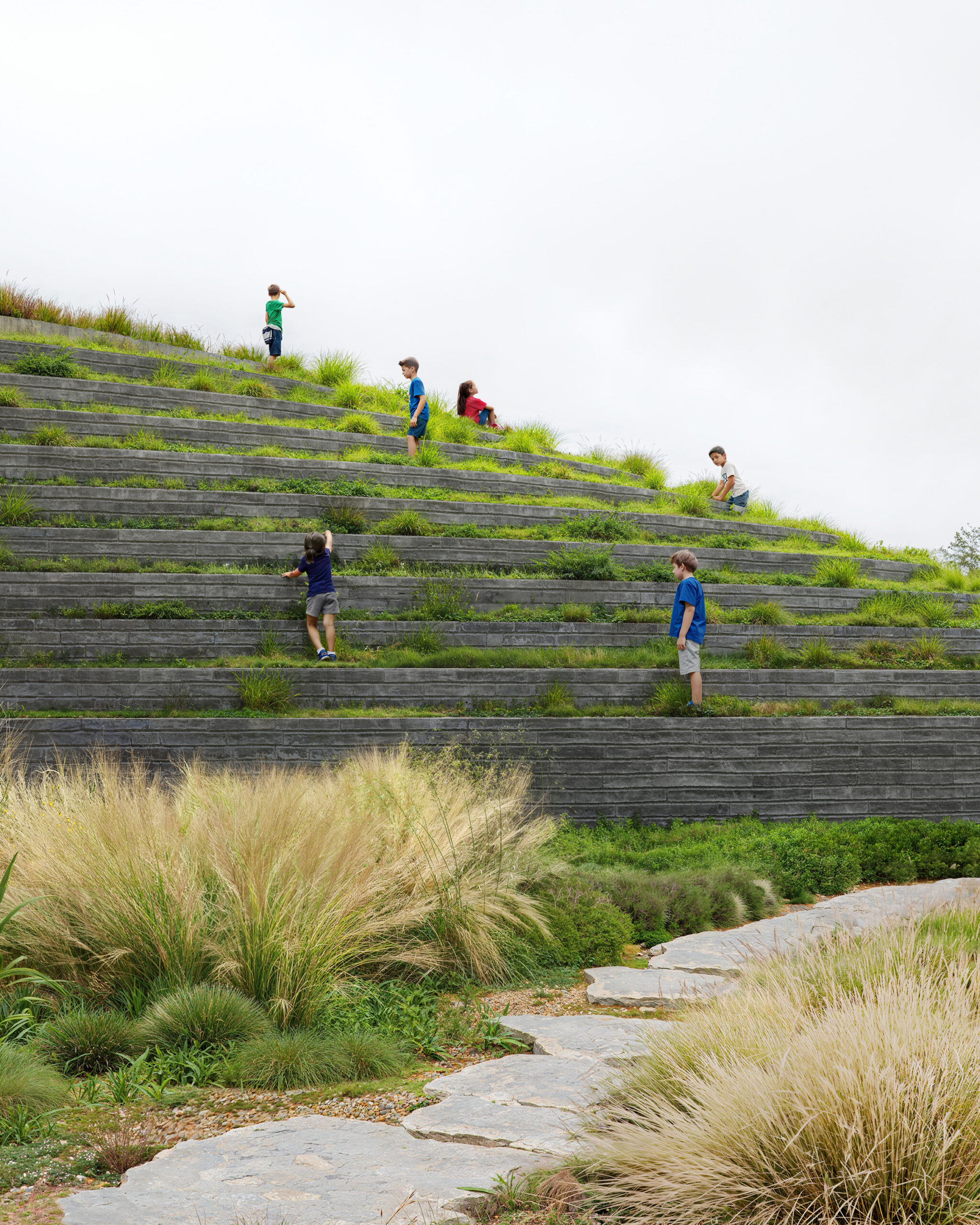
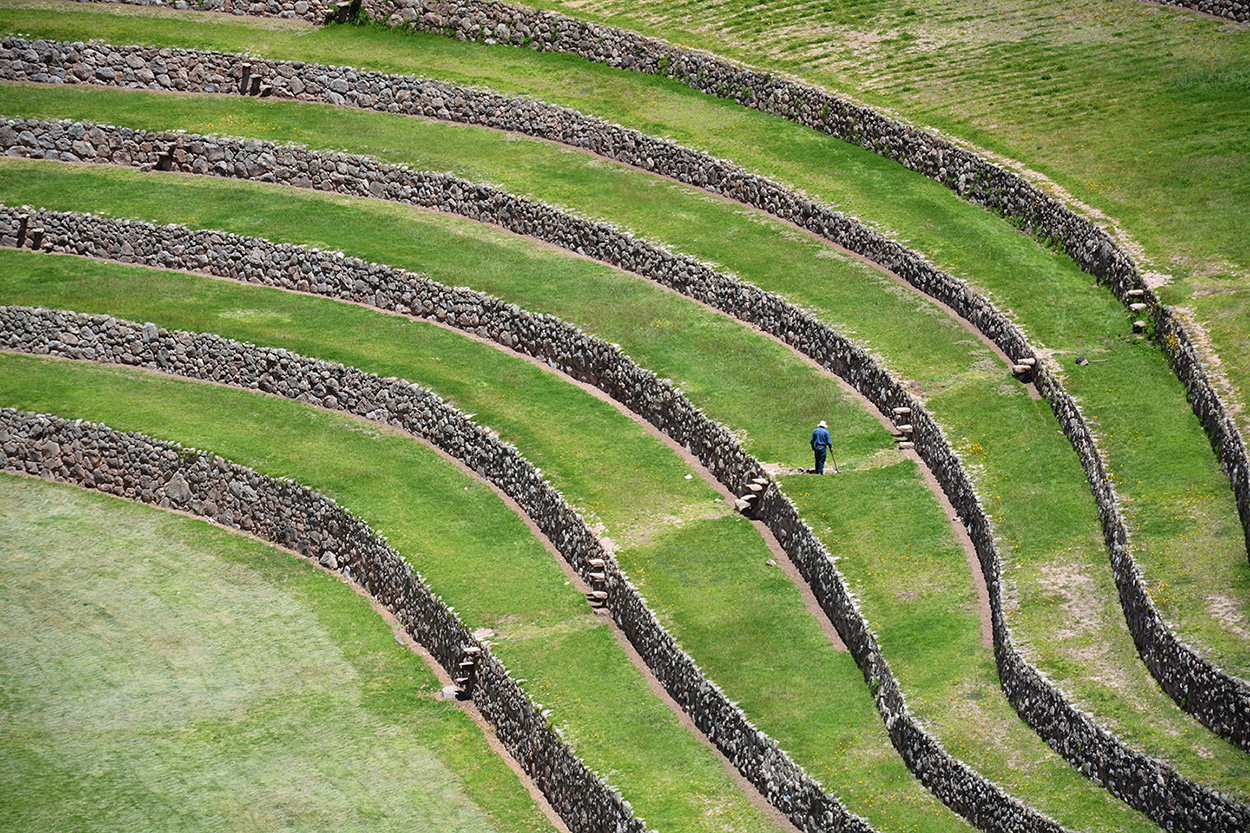
The project presented a clear opportunity: to rethink the typical architecture of primary schools beyond classrooms and corridors. The design is shaped by six circular forms resembling the pre-Hispanic mounds of ancient Mexico—each created from earthwork, stone or adobe by successive civilisations for ceremonial, residential, and political uses. These modules, each dedicated to a distinct educational level or administration area, intersect to form connections and light-filled cores. Classrooms sit low and close to the ground, with roofs rising upwards as discs of planted fields. A large central green courtyard unites each disc, working as a social anchor, connecting students and staff in a zone where encounters would naturally flourish.
The school’s radial masses are fringed by patios that lead onto this central open heart, uniting the architecture with Mexico’s lineage of open-air schools—a tradition that frequently incorporated patios throughout different architectural and pedagogical periods. All six modules are oriented towards the volcano—the natural plumbline of the valley—whose presence teaches nature’s lessons.
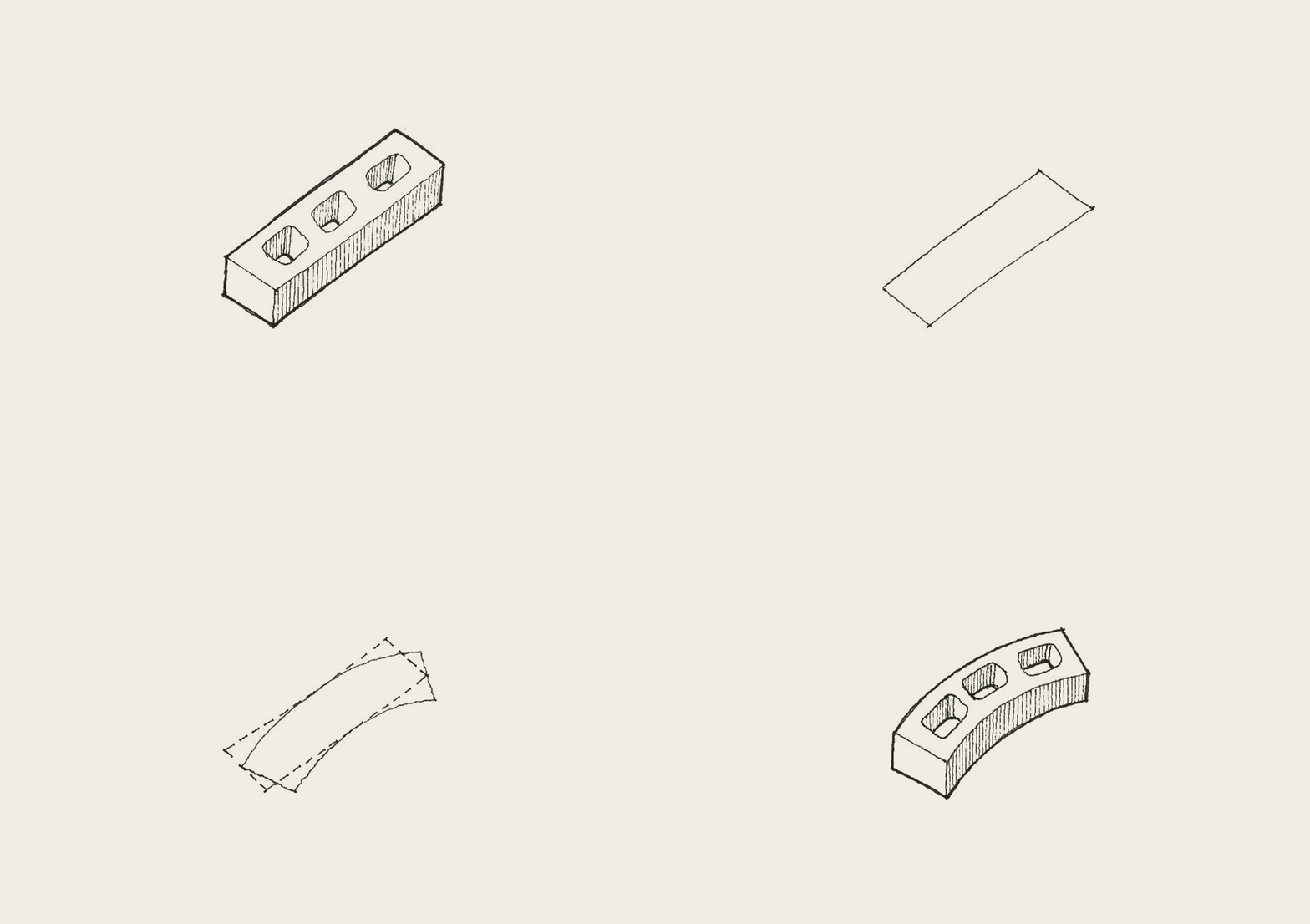
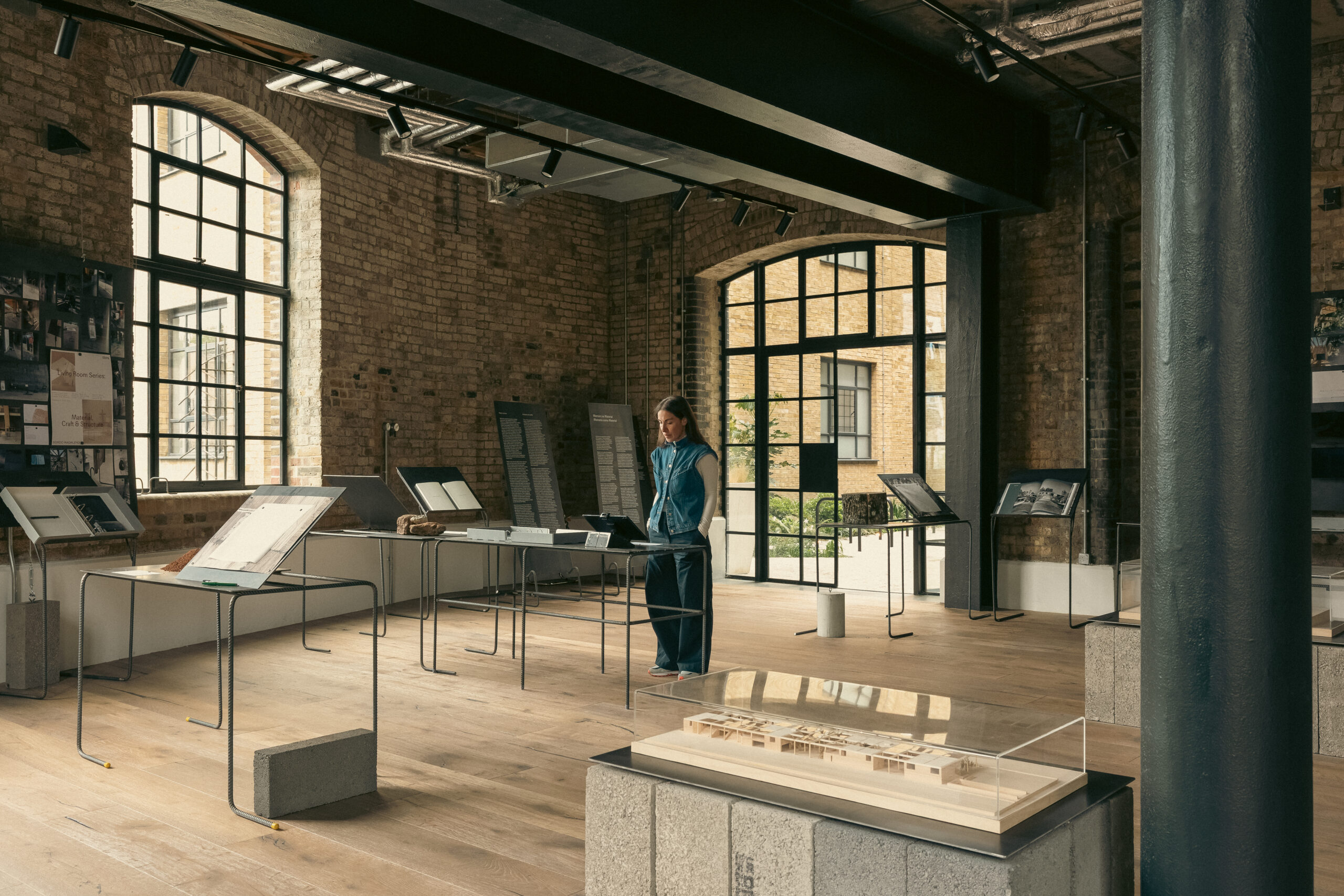
The school builds on Puebla’s long tradition of masonry and concrete construction. Sordo Madaleno’s team worked with local fabricators to adapt regional brick-making techniques, re-engineering typically rectangular bricks into curved units, prefabricated for efficient assembly across the six modules. Volcanic basalt from Puebla is used in floors, uniting the school with the geology of its site.
The Canadian School draws from Mexico’s wider history of pedagogy, from the Aztec Calmécac to the open-air schools of the 20th century. That tradition continues here: movement through the campus unfolds across patios, over roofs, through thresholds, and along stepped terraces, making the architecture feel as continuous as the landscape. The result is an environment where children learn through movement, discovery, and encounter with their surroundings, building knowledge that grows as much from the body’s navigation of space as from lessons within the classroom.
Canadian School details
Typology
Location
Client
Status
Materials
Credits
Collaborators / Consultants
Javier Sordo Madaleno Bringas, Javier Sordo Madaleno, Fernando Sordo Madaleno, Edgar Beltrán, Daniel Laredo, Miguel Loyola, María Fernanda Arenas, Diego Velázquez, Marcos Hernández, Laura Mata, Ricardo Mondragón, Tritio, Gaype, Lua, Grubo Joben, Plantica, Greenray, Teledomótica, Pedro Medina, Pulsen, Solatube.
Images
Mir, Sordo Madaleno