Iglesia San Ignacio de Loyola
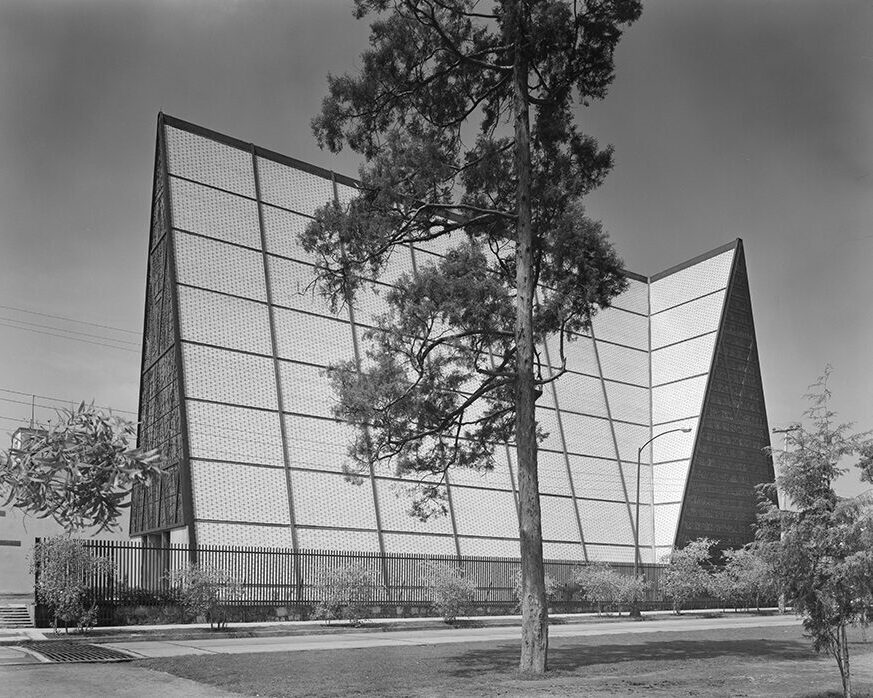
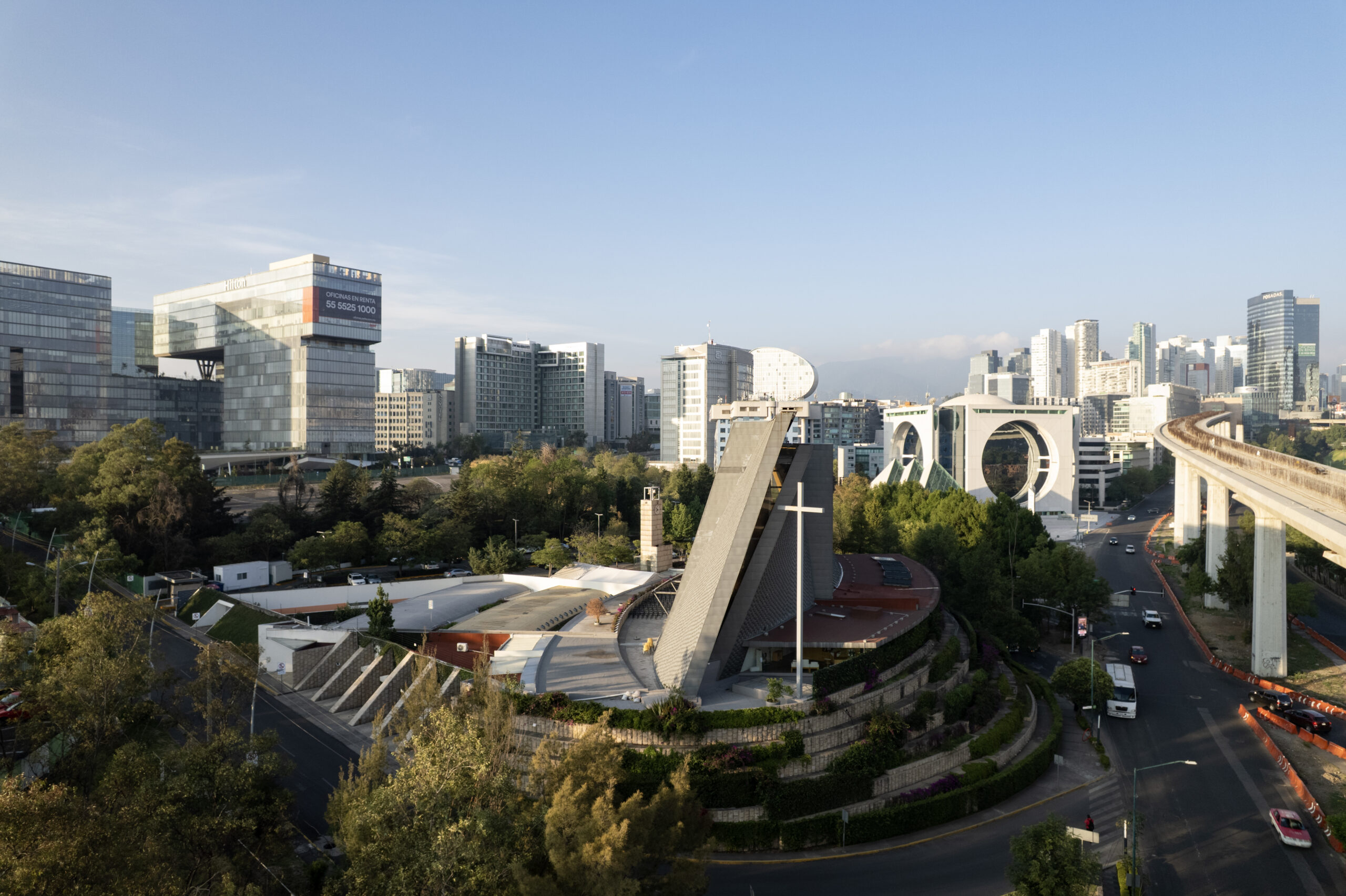
One of Sordo Madaleno’s most celebrated Modernist buildings, the San Ignacio de Loyola Church sublimates the enduring qualities of historic sacred spaces into a modern small-scale sanctuary. Its steep verticality, evenly distributed presence of light, and radical minimalism engages with a wave of change in ecclesiastical design, prompted by liturgical reforms within Catholicism in the 1960s. In its profound simplicity, it becomes a protagonist to the global rethink on spaces of worship.
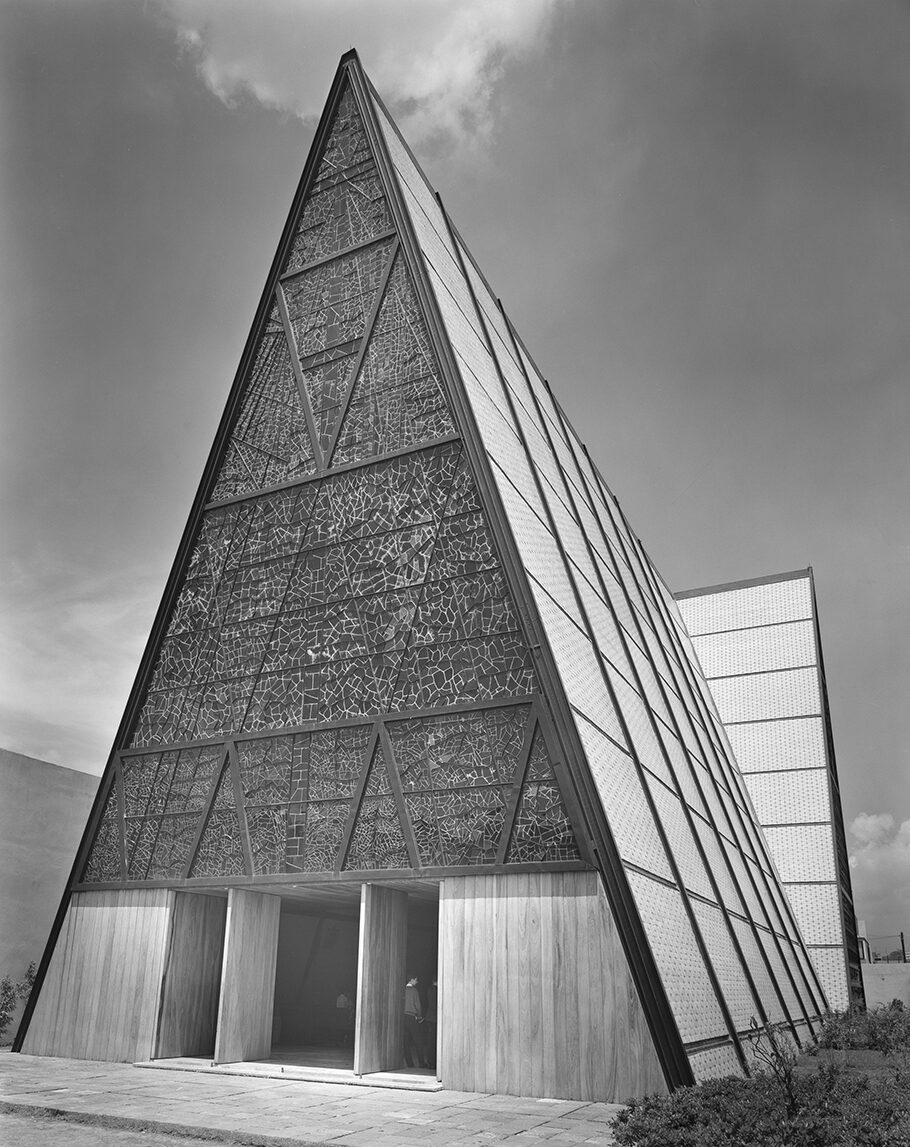
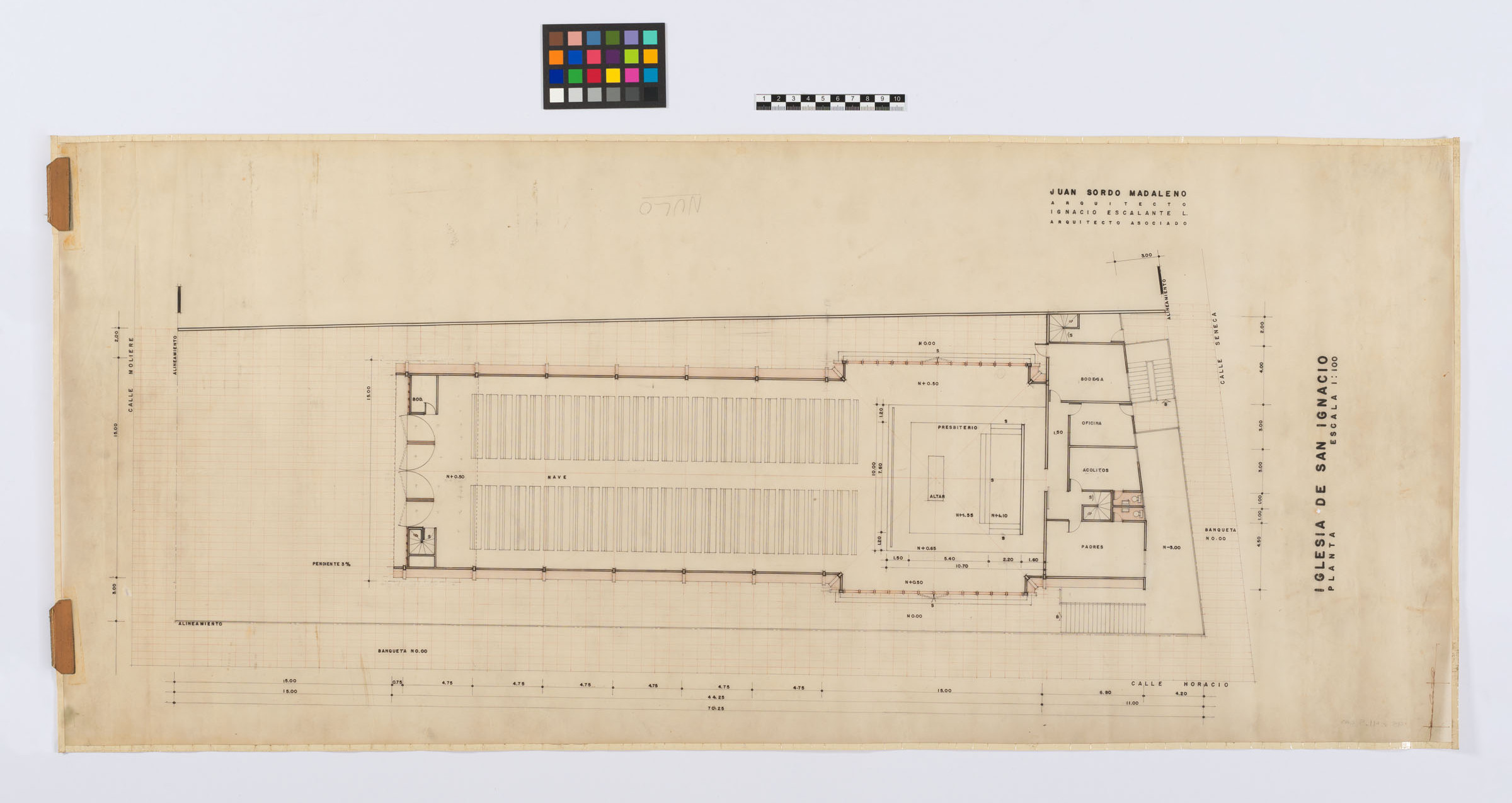
Built on the outer edge of Polanco in Mexico City, the church’s plan works to a single rectangular nave, laid out along its narrow plot, with a small vestibule at its end. From above, the church reads as an overtly legible cruciform – a reduction of line and massing that eliminates the non-essential, elevating both what is there and not there.

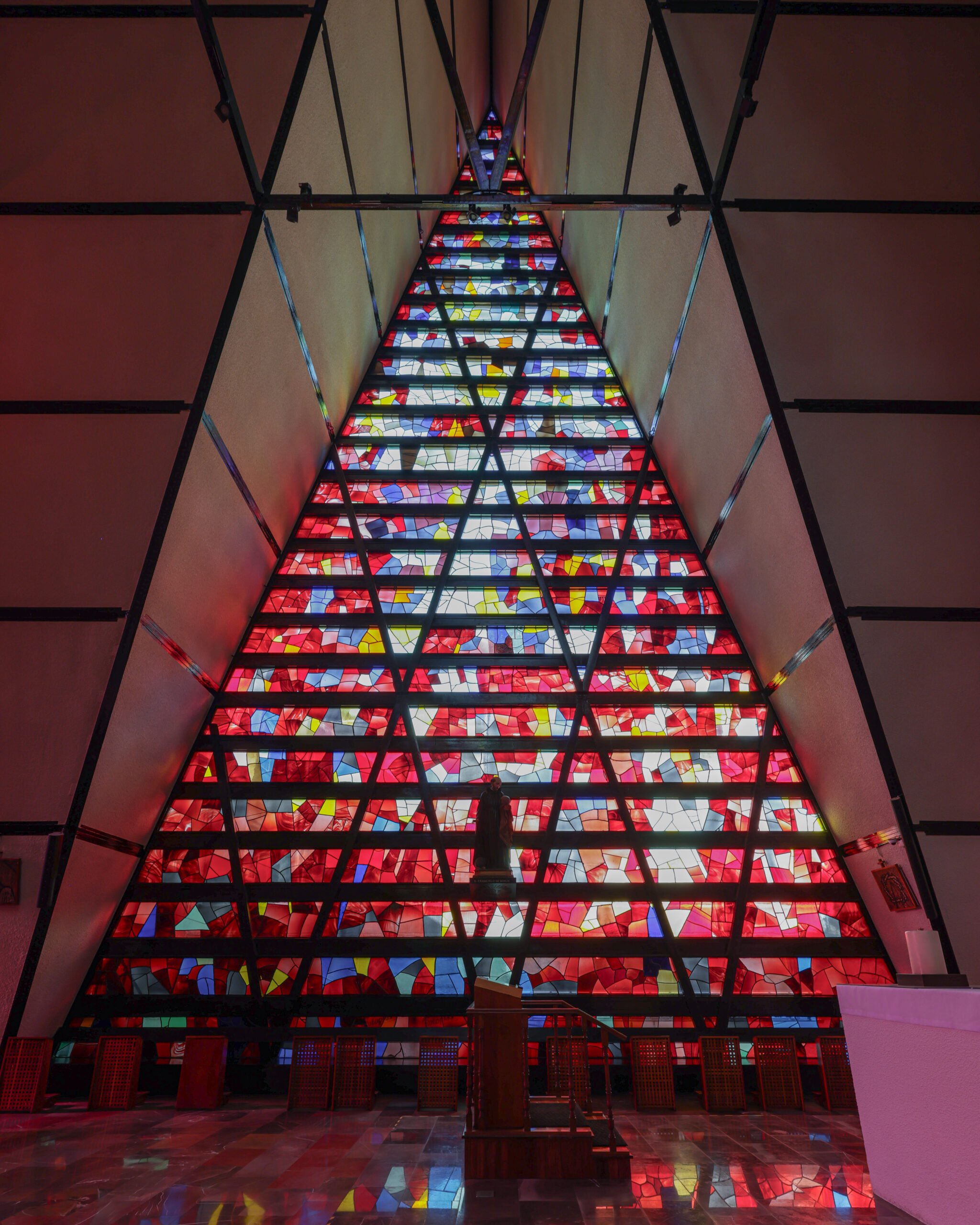
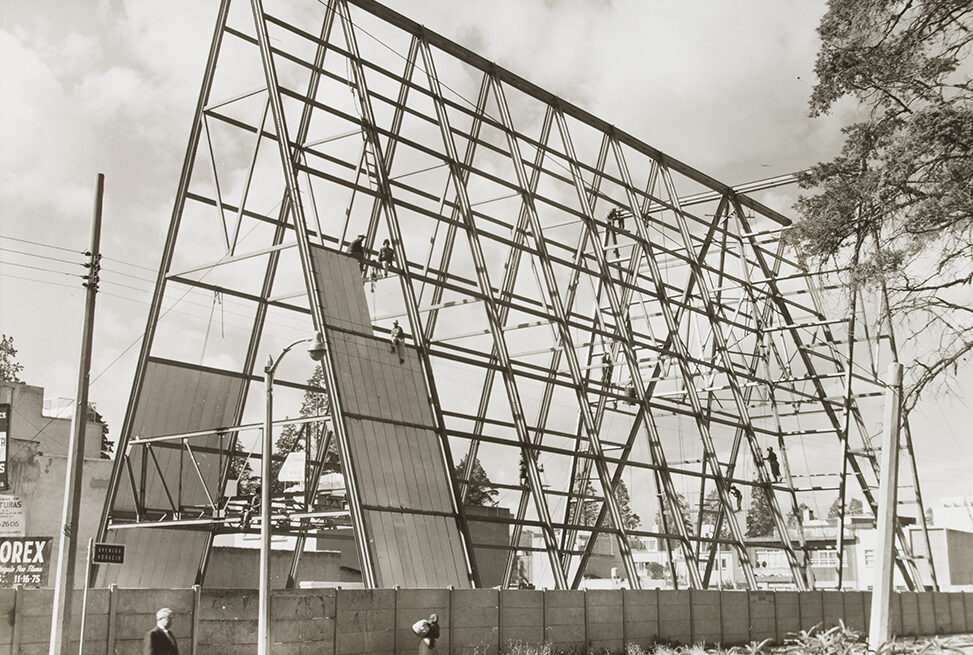
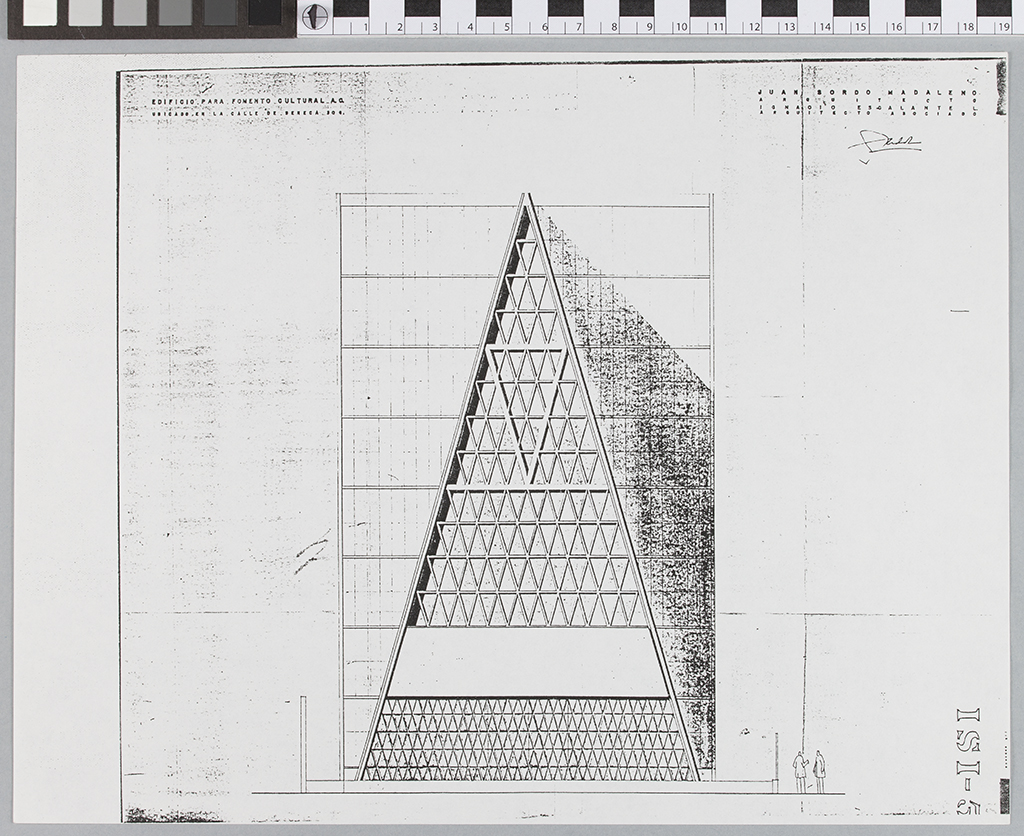
Designed as a dramatic prism, formed of a pitched steel framework infilled with textured tiling that celebrates material craftsmanship. The pitch of the structure is such that the need for perimeter supporting walls is eliminated. This scrubbing out of excess heightens the building’s purity – the building’s vertical ascent is uninterrupted; the experience of spatial levitation allowed to be felt wholly.
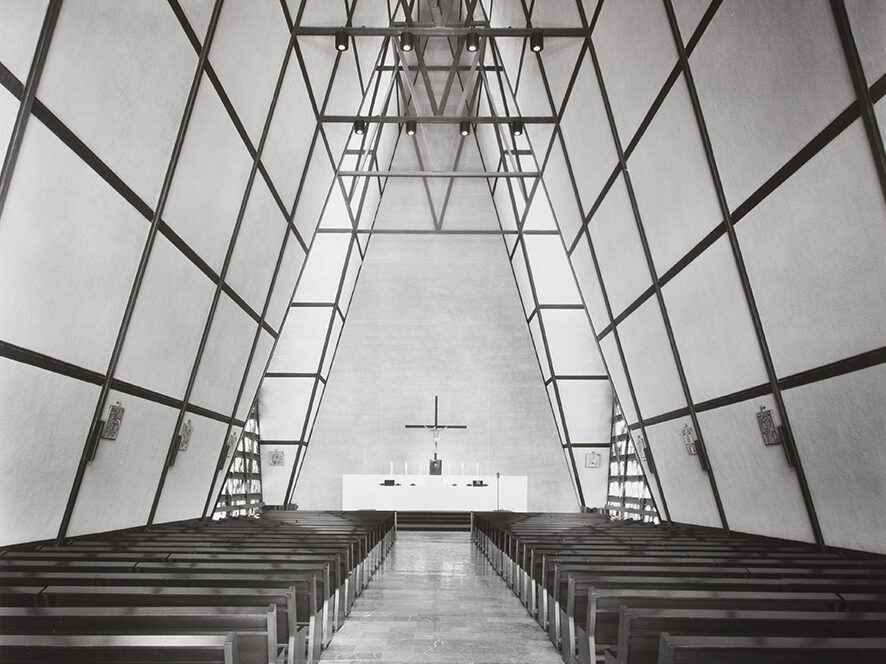
Light enters from two points, its tonality manipulated by the shades of tall, seemingly pixelated stained-glass windows. Inside, the dramatically linear space is characterised by a minimalism of materials. The black steel framework becomes a series of converging lines, all moving upwards and together towards one longitudinal axis. This, combined with the church’s steep interiority, draws the eye overhead, along its the length of nave to the altar – the architecture is a signalling gesture, a means of generating harmony that can be felt, not just seen.

Iglesia San Ignacio de Loyola details
Typology
Location
Client
Status
Materials
Credits
Collaborators / Consultants
Juan Sordo Madaleno,José Adolfo Wiechers, Ignacio Escalante
Images
Armando Salas, Sordo Madaleno